+91-98777-81556 info@sepalhealthcare.com

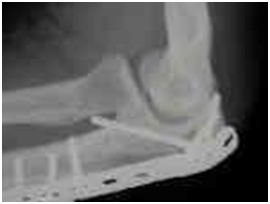
This plate is mostly used for complex extra- and intra-articular olecranon fractures. These may also be used for other conditions such as pseudoarthrosis of the proximal ulna, osteotomies and simple olecranon fractures. This type of plate provides proximal extension with multiple screw options. This pate secures the olecranon, thus facilitating faster recovery from fractures. These plates are specifically designed to counteract the pressure and impacts of the triceps muscle.

The main advantages of the plate includes:

Approaches to Proximal Forearm Fracture

Forearm fracture refers to cracks or breakage of the radius or ulna. Treatment of the fracture is done based on the location of the crack or break, such as proximal to the wrist, at the middle or near the elbow.
Olecranon plates are used as a part of the LCP (locking compression plate), and are used to create a fixed-angle construct.

Following are some of the advantages of the Olecranon 3.5mm Plates –

Surgical Approach to Forearm Fractures

Pre-surgical -

The surgeon examines the patient’s X-Ray, CT or the physical condition, constantly monitoring the vitals. Once the patient is medically ready for the surgery, the surgeon counsels the patient and the attendees regarding the expected results of the surgery. In case the patient is not fit for the surgery, the doctor may opt for an external fixation system as a temporary solution.

Positioning the patient

The patient is placed in a position suitable to the surgeon, either in the prone or the lateral position with the elbow arched over a side rest.

Reducing the fracture

After the fracture is reduced directly or indirectly (depending upon the type and degree of the fracture), temporary fixation is done using K-wires.

Prophylactic Antibiotics -

Depending on the condition of the patient, the surgeon prescribes suitable antibiotics prior to the surgery to ensure complete healing. This also minimizes the occurrences of post-operative infections.

Surgical procedure–

An incision is made posterior from the supracondylar area at a place around 5 cm distal to the fracture. The incision is made in such a way that the ulnar nerve is protected.

Plate fixation–

Post the provisional fixation of the fracture, the plate of a suitable measurement is affixed to the proximal fractured fragment. The main precaution that has to be kept in mind is that the plate should not block full extension. The plate may have to be bent a little to adapt to the shape of the bone.The plate is then attached temporarily, using a cortex screw. Using a K-wire, the screw position and length is determined in the proximal region. After this, the suitable screw is inserted manually or using a tool, across all the positions required.

X
Open chat
Hello , How Can We Help You ?