+91-98777-81556 info@sepalhealthcare.com

A forearm is the portion of the arm situated between the wrist and elbow and is made of two bones that are relatively parallel to each other, namely radius and ulna.

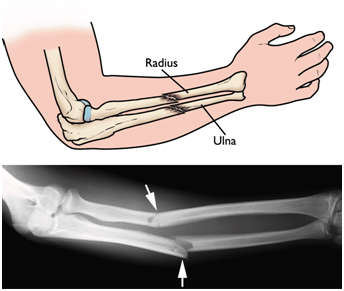
Forearm fracture refers to the condition in which the bones in the forearm, i.e., the radius and ulna are either cracked or broken. The break or crack could be located anywhere across the forearm – near the wrist, anywhere in the middle or towards the end of the bones near the elbow.

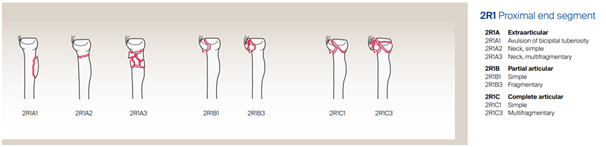
These plates are used for the fractures in the radius, as per the AO guidelines.

Treatment:

Forearm fractures can be treated using surgical as well as non-surgical approaches. The non-surgical or conservative approach requires placing the bones together using a cast or a brace. This is possible only if the broken bone is not out of place.
The surgical approach involves two procedures – internal fixation and external fixation with the help of screws and plates. In internal fixation, the bones are joined together with surgical screws and plates that are fixed at the outer surface of the bone. Another way of joining the broken bones is through specially designed rods that are inserted through the marrow.

Radial Head Plate 2.7mm

The Radial Head Plate (2.7mm) is mostly used for extra-articular and intra-articular fractures of the proximal radius and severely fragmented radial neck fractures. There are times when the radial head fracture is multi-fragmented, and thus the same cannot be repaired; this leads to the need for replacement, based on the pattern of the injury.
This plate provides fixation options for a variety of fracture patterns. This plate provides a stable fixation, by creating a fixed-angle construct offering angular stability. Since the shape of the plate allows sub-muscular insertion, it preserves the viability and strength of the tissues. This plate also facilitates early mobilization.

The main advantages of the plate includes:

Approaches to Proximal Forearm Fracture

Forearm fracture refers to cracks or breakage of the radius or ulna. Treatment of the fracture is done based on the location of the crack or break, such as proximal to the wrist, at the middle or near the elbow.
Radial head plates are used when there is a severe damage to the radial head, i.e., multi-fragmented fractures.

Following are some of the advantages of the Radial Head 2.7mm Plates -

Pre-surgical:

The orthopaedic doctor examines the patient’s X-Ray, CT or the MRI along with the physical condition, to check for normalcy or anomalies in the vitals. Once the patient is considered fit for the surgery, the surgeon explains the process to the patient and his relatives regarding the expected results of the surgery.

Positioning the patient:

The patient is positioned in the supine position on the table, and is examined from the axilla to the hand. Mostly, a lateral approach is used.

Reduction of Fracture:

With the help of pointed Reduction Forceps, reduction and temporary fixation of fragments is done using K-wires.

Prophylactic Antibiotics:

Depending on the condition of the patient, the surgeon prescribes suitable antibiotics prior to the surgery to ensure complete healing. This also minimizes the occurrences of post-operative infections.

Surgical Procedure:

A capsular incision is made in such a way that the radial nerve is protected. It is important to locate the Hotchkiss Safe Zone, which is free from the impingement between ulna and radius.

Applying the Radial Head Plate:

Post the temporary fixation of the fracture, the plate is applied using a preliminary cortex screw. Since the plates are pre-contoured, bending of the plates may not be required. If, however, it is absolutely necessary to bend the plate, the same may be done using specified Bending Pliers. After this, the suitable screws are inserted manually or using a drilling tool, across all the positions required.

X
Open chat
Hello , How Can We Help You ?